Seven hundred and fifteen feet above the churning Atlantic, a pyramidal rock thrusts skyward from the sea. Wind howls across stone terraces. Waves crash against ancient foundations. This is Skellig Michael: a place where medieval monks once sought God in isolation, where Vikings brought terror, and where, centuries later, Luke Skywalker would seek refuge from a galaxy far, far away.
The story of this UNESCO World Heritage Site spans fourteen centuries, weaving together faith, resilience, abandonment, and unexpected Hollywood fame. It's a narrative that challenges our understanding of human determination and the lengths people will go to pursue spiritual enlightenment.
The Monks Who Chose Exile: Skellig's 6th-Century Foundations
Imagine leaving civilisation behind: not for a peaceful countryside retreat, but for a jagged rock in the middle of the Atlantic. Between the 6th and 8th centuries, that's precisely what a small community of early Christian monks did.
The monastery is traditionally attributed to Saint Fionán, though the earliest written records don't appear until the late 8th century. These weren't casual hermits seeking a quiet weekend away. Archaeological evidence suggests approximately twelve monks inhabited the island at any given time, carving out an existence on sheer determination and unwavering faith.
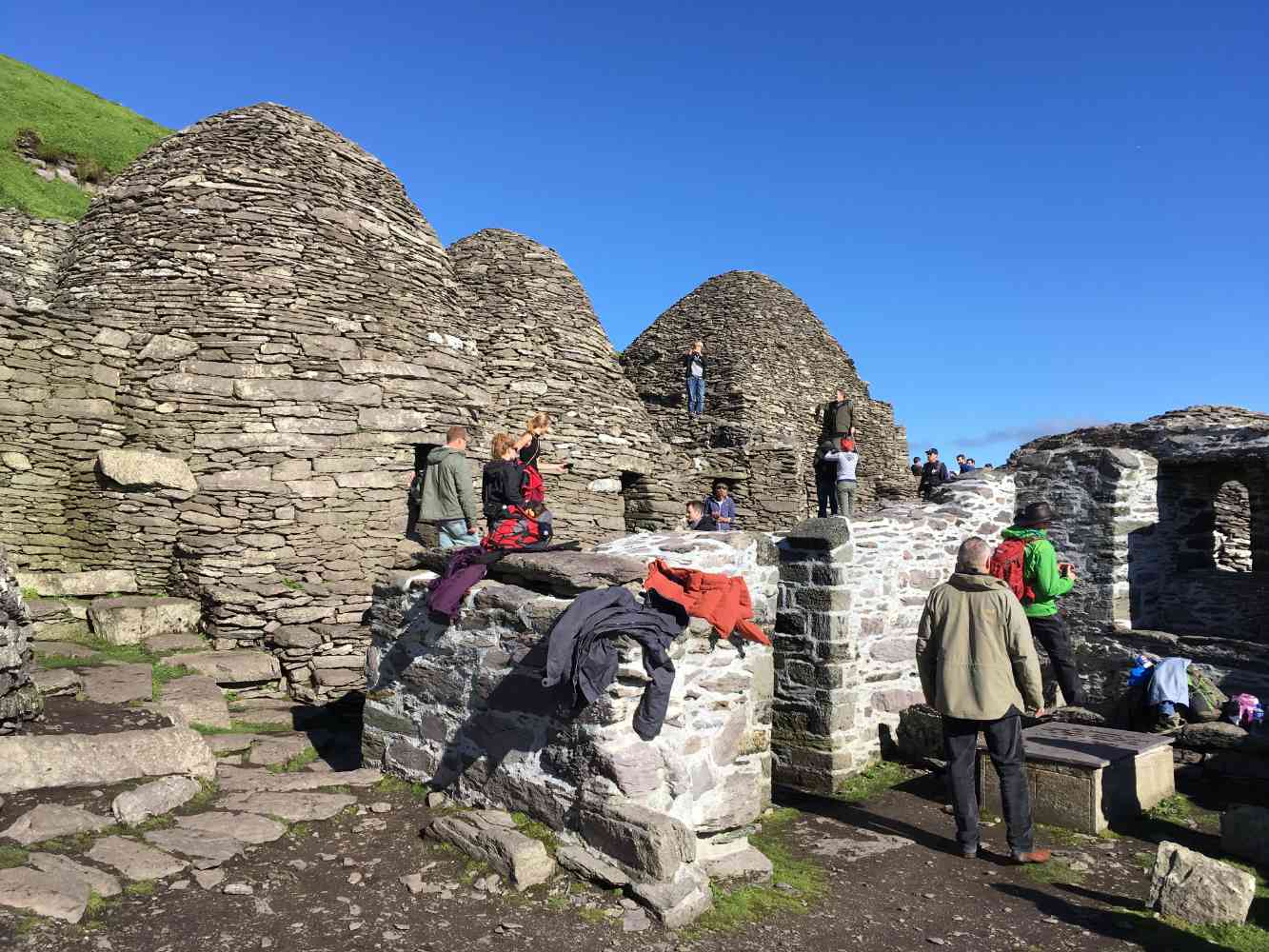
The island's name itself tells a story: sceilg derives from the Irish word for "steep rock," while "Michael" honours Saint Michael the Archangel, to whom the monastery was dedicated by 1044 at the latest. The monks built remarkable beehive huts: dome-shaped stone structures that still stand today: using a technique called corbelling, where stones are carefully layered without mortar to create waterproof dwellings.
These ascetics chose one of the most inhospitable locations in Ireland precisely because of its challenges. The spiritual practice of seeking God through physical hardship and isolation was central to early Celtic Christianity. Every climb up the 600-plus stone steps, every storm endured, every cold night in their stone cells: these were offerings, prayers made tangible through suffering.
When the Northmen Came: Viking Raids and Monastic Resilience
Life on Skellig Michael demanded constant vigilance against nature's fury. But from the early 9th century onward, the monks faced a new terror: Viking raiders.
The Atlantic coast of Ireland became a hunting ground for Norse longships, and even Skellig Michael's remote location offered no sanctuary. In 823 AD, according to the Annals of Tallaght, Vikings launched a devastating raid on the monastery. They kidnapped the abbot: the spiritual leader of the community: and subjected him to a horrific fate: starvation. He died in captivity, a martyr to his faith and his flock.
Think about that for a moment. The very isolation that made Skellig Michael ideal for contemplative prayer also made it vulnerable. No army could reach the island in time. No rescue was possible. When Viking sails appeared on the horizon, the monks could only pray.
Yet remarkably, the monastery survived these repeated attacks throughout the medieval period. How? We can only speculate. Perhaps the Vikings found little of material value to plunder after initial raids. Perhaps the monks developed early warning systems or hiding places among the island's crevices and caves. What we know for certain is that despite the violence, despite the fear, the community persevered for centuries.
This resilience speaks to something profound about human nature. These monks had chosen Skellig Michael for spiritual reasons, and no earthly terror: not storms, not starvation, not even Viking axes: would drive them from their sacred purpose.
From Monastery to Pilgrimage: The Island's Transformation
All things change. By the 12th-13th century, the monastic community finally abandoned Skellig Michael. Climate shifts, changing religious practices, and the practical difficulties of maintaining such a remote outpost likely all contributed to the decision. The monks relocated to Ballinskelligs monastery on the mainland, where life was considerably more manageable.
But Skellig Michael's spiritual significance didn't end with the monks' departure. Instead, the island transformed into an important place of pilgrimage. For centuries afterward, the faithful would make the treacherous sea crossing to climb the stone steps, visit the ancient beehive huts, and pray where holy men had once lived.
The island's ownership changed hands multiple times through history. During the Elizabethan Reformation in 1578, it passed to the Butler family. Then, in the early 1800s, the Commission for Irish Lights acquired the site to construct a lighthouse: practical maritime safety replacing spiritual illumination, you might say. Finally, in 1880, the Office of Public Works took control, recognising the site's archaeological and historical importance.
Each transition represented a different chapter in Ireland's story: medieval monasticism, Reformation politics, industrial-age infrastructure, and eventually heritage conservation. The lighthouse keepers who maintained the beacon in the 19th and early 20th centuries could never have imagined that their isolated workplace would one day become an international tourist destination.
The Star Wars Effect: Ancient Stones Meet Modern Mythology
Fast-forward to 2014. A film crew arrived on Skellig Michael with cameras, costumes, and a script that would thrust this ancient monastery into global consciousness in an entirely new way.
Director J.J. Abrams chose Skellig Michael as the filming location for the final scene of Star Wars: The Force Awakens. When Rey finally finds Luke Skywalker in exile, she discovers him on what appears to be a remote alien planet: but eagle-eyed viewers and Irish locals recognised those distinctive stone huts and dramatic Atlantic backdrop immediately.
The island appeared again in The Last Jedi, with extended sequences filmed among the beehive huts and stone terraces. Suddenly, Skellig Michael wasn't just a UNESCO World Heritage Site known to archaeology enthusiasts and Irish history buffs. It was Luke Skywalker's island: a location that millions of Star Wars fans around the world desperately wanted to visit.
The parallels between the ancient monks and the fictional Jedi Master aren't accidental. Both sought isolation at the edge of the known world. Both chose to withdraw from society to contemplate deeper truths. The filmmakers recognised that Skellig Michael embodied exactly the kind of sacred, austere refuge a disillusioned hero would choose.
This Hollywood connection has been both blessing and challenge for heritage managers. Interest in visiting Skellig Michael exploded after 2015, with boat tour bookings increasing dramatically. The Office of Public Works had to carefully balance accessibility with conservation, implementing strict visitor limits to protect the fragile archaeological site.
Why Skellig Michael Still Matters
In 1996, UNESCO designated Skellig Michael a World Heritage Site, recognising it as "an exceptional example of early religious settlement." But the island's significance extends beyond its official designations.
Skellig Michael reminds us that humans have always sought meaning in extreme places. Whether 6th-century monks fleeing worldly distractions or modern visitors escaping their daily routines, we're drawn to locations that challenge us, that demand something from us in return for their revelations.
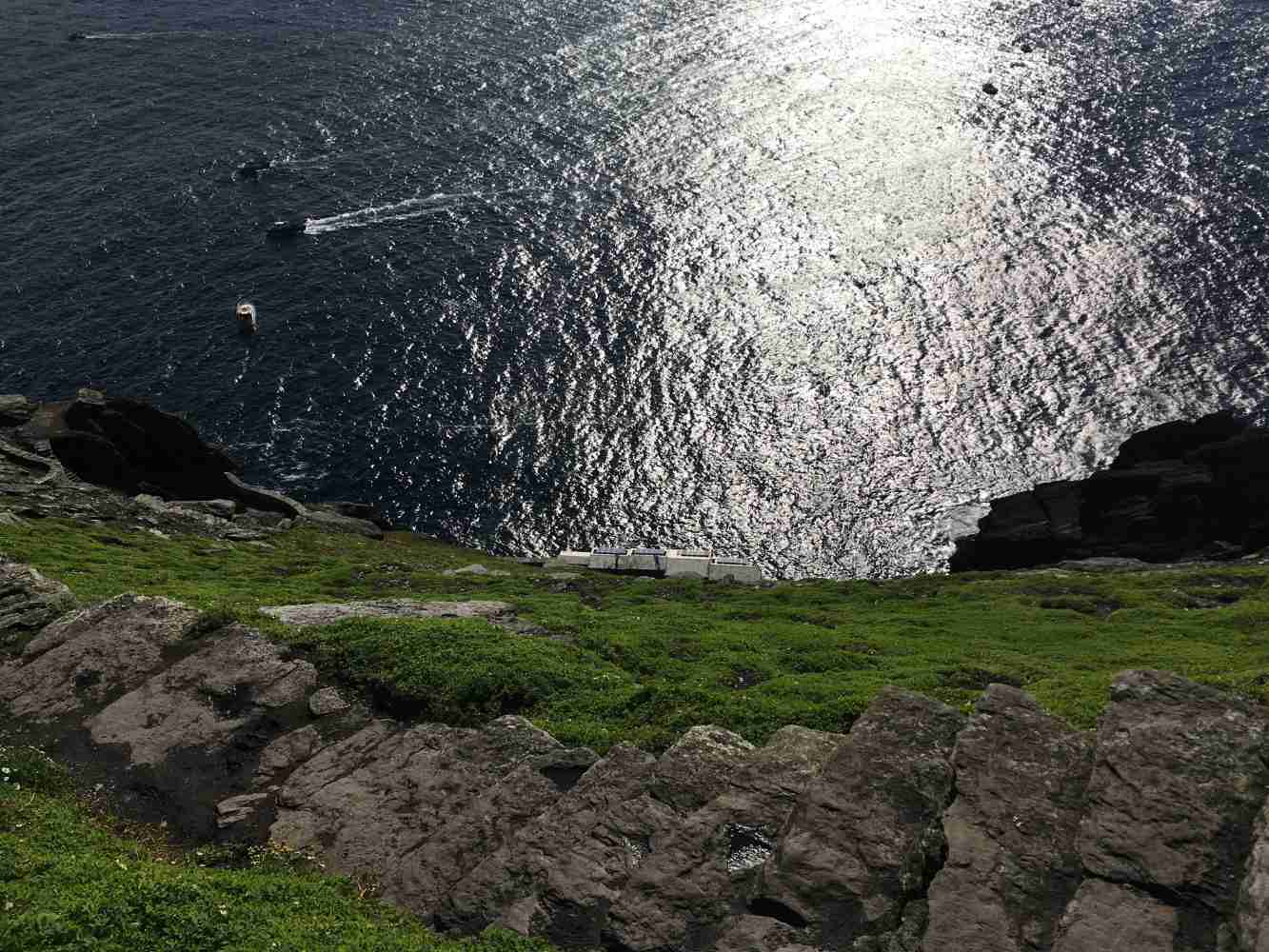
The beehive huts still stand after fourteen centuries: a testament to Celtic engineering and craftsmanship. The stone steps, worn smooth by countless footsteps, connect us physically to those long-dead monks who climbed them daily. When you stand on Skellig Michael's terraces, you're standing where Vikings once stood, where medieval pilgrims prayed, where film crews captured scenes that captivated millions.
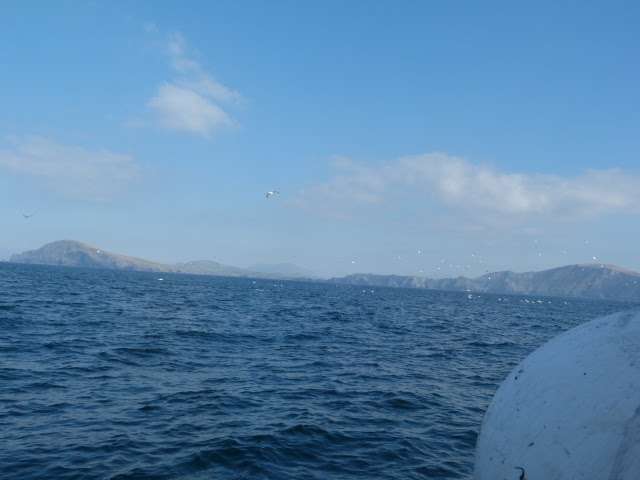
Today, Great Skellig boat tours offer visitors the chance to experience the island's majesty up close, even when landing isn't possible due to weather or conservation restrictions. Circling the island by boat, you'll see the same dramatic cliffs and crashing waves that both inspired and challenged the monks. You might spot puffins, gannets, and seals: wildlife that has inhabited these waters far longer than any human settlement.
The history of Skellig Michael teaches us about faith, perseverance, and the enduring human need for places that stand apart from ordinary life. From ancient monks to modern moviegoers, we keep returning to this remarkable rock: not despite its isolation and challenges, but because of them.