Remember the end of The Force Awakens, when Rey climbs the stone steps to find Luke Skywalker at the top of an island? That island is Skellig Michael, a real place about 12 kilometres off the coast of County Kerry. It’s a UNESCO World Heritage Site, and the steps are real too. There are around 618 of them.
You don’t have to climb them to see the island. Our boat trips go all the way around Skellig Michael, so you can see the old monastery and the places you’ll recognise from the films without leaving the boat.
How hard is the climb?
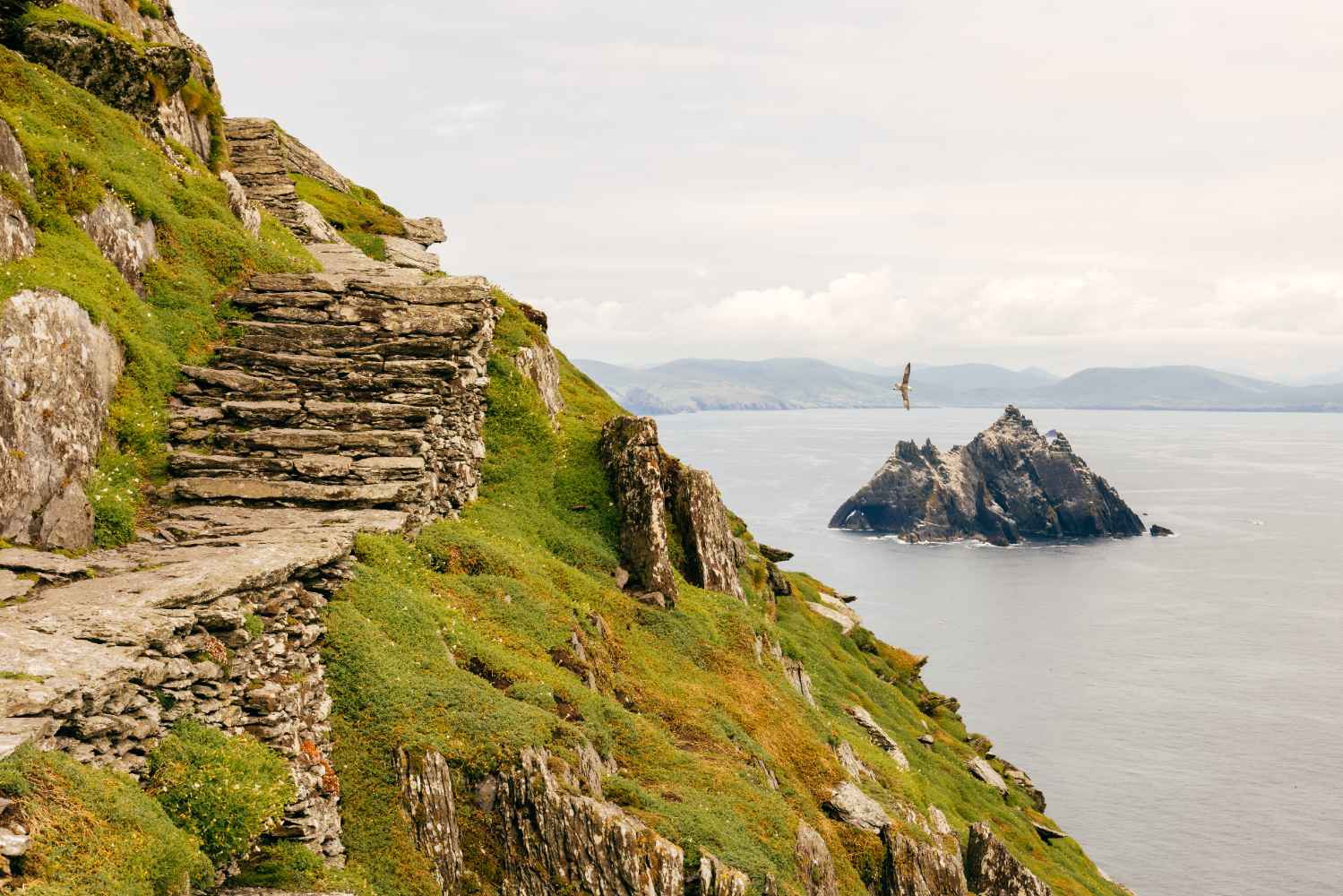
The steps on Skellig Michael were built by monks over 1,000 years ago. They’re steep and uneven, and there are no handrails. Most people take 45 minutes to an hour to get to the top.
The island is looked after by the Office of Public Works, and landing tours come with restrictions. You need to be fit and steady on your feet. If you’re not sure about the climb, or you have young children with you, a boat trip is the easier way to see it.
What you see from the boat
Our trips go around both Skellig Michael and its neighbour, Little Skellig. Going all the way round means you see the islands from every side, which you can’t do from the top of the steps.
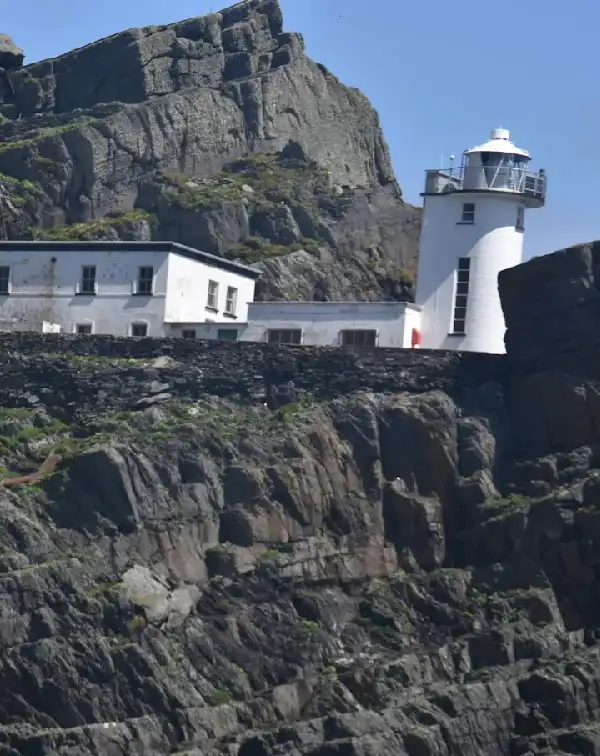
From the water you can see the beehive huts where the monks lived. These are the stone huts you see in the films, and they’re easy to spot as the boat comes in. You’ll also see Christ’s Saddle, the dip between the island’s two peaks, and the lighthouse on the south west side.
Skellig Michael is over 200 metres high, and it looks even bigger from a small boat down at the water.
Skellig Michael in Star Wars
In the films, Skellig Michael is Ahch-To, the planet where Luke Skywalker has gone to hide. It appears in the last scene of The Force Awakens and again in The Last Jedi, where a lot of the story with Rey and Luke takes place on the island.
A lot of the shots of the island in the films look down on it from the sea and the air, with the rock coming straight up out of the Atlantic. That’s the view you get from the boat. If you want to know more about the island’s real history, from the monks to the film crews, have a read of our history of Skellig Michael.
Puffins and gannets
The films didn’t show much of the wildlife, but Skellig Michael is one of the most important places for seabirds in Ireland. Puffins nest in burrows on the slopes from late spring through the summer, and you’ll often see them on the rocks or flying past the boat.
Little Skellig has one of the biggest gannet colonies in the world, with over 30,000 pairs. From a distance the island looks white, and up close you can see it’s covered in birds. Nobody is allowed to land there, so the boat is the only way to see it. There’s more on our birds and wildlife page.
Bringing the family
Landing tours aren’t suitable for small children, and plenty of adults don’t fancy the climb either. Our boat trips have no age restrictions and life jackets are provided, so everyone from toddlers to grandparents can come along. We’ve had three generations of the same family on board together.
Practical information
Our trips leave from the marina in Portmagee, County Kerry, which is about an hour and a half’s drive from Killarney. A trip takes about 2 to 2.5 hours, which is enough time to go around both islands, look out for wildlife and get your photos.
Everything depends on the weather. Landing tours need a calm sea to get people on and off the island, so they’re cancelled more often. Because we don’t land, our trips can sometimes go out on days when the landing boats can’t.
In the busy months of June, July and August, it’s worth booking a few days ahead. We sometimes have space at short notice, but dates do fill up.
See it from the sea
You don’t need to climb the steps to see where Luke Skywalker lived. From the boat you’ll see the beehive huts, Christ’s Saddle and the lighthouse, along with thousands of seabirds and the gannets on Little Skellig.