Sometime around the 6th century, a group of monks rowed out across the Atlantic to a steep rock over 200 metres high and decided to live there. Most people looking for a quiet life of prayer wouldn’t pick Skellig Michael, but for these monks being cut off from everyone was the whole point.
You can still see what they built today. You don’t have to climb the 600 or so steps either, because on a Skellig Michael boat trip you can see the huts and stairways from the water, the same way sailors and pilgrims have seen them for over 1,400 years.
Why would anyone live there?
The monks set up the monastery on Skellig Michael sometime between the 6th and 8th centuries. They weren’t running away from anything. They were following a kind of religious life known in Latin as peregrinatio pro Dei amore, which means pilgrimage for the love of God.
They chose Skellig Michael on purpose. To them it was the edge of the known world, and living out there with nothing around them but the sea and the birds was meant to bring them closer to God. There was nothing to distract them, which was exactly what they wanted.
What they built
The monks built a proper settlement on the island, and most of it is still standing. They did it all without mortar or cement.
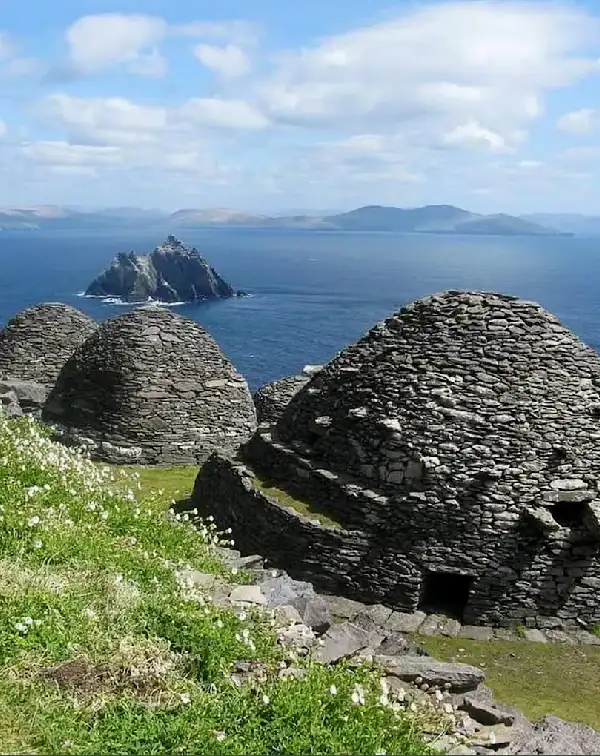
The best known buildings are the beehive huts, called clocháns in Irish. They’re made of dry stone, with each layer of stones set a little further in than the one below until the roof closes at the top. They kept out the wind and rain, they’re roomier inside than you’d expect, and they’ve lasted over 1,000 years.
There’s more to the monastery than the huts. There’s a small church, two oratories, a graveyard and stone cisterns for collecting rainwater. Archaeologists think about twelve monks lived there at any one time.
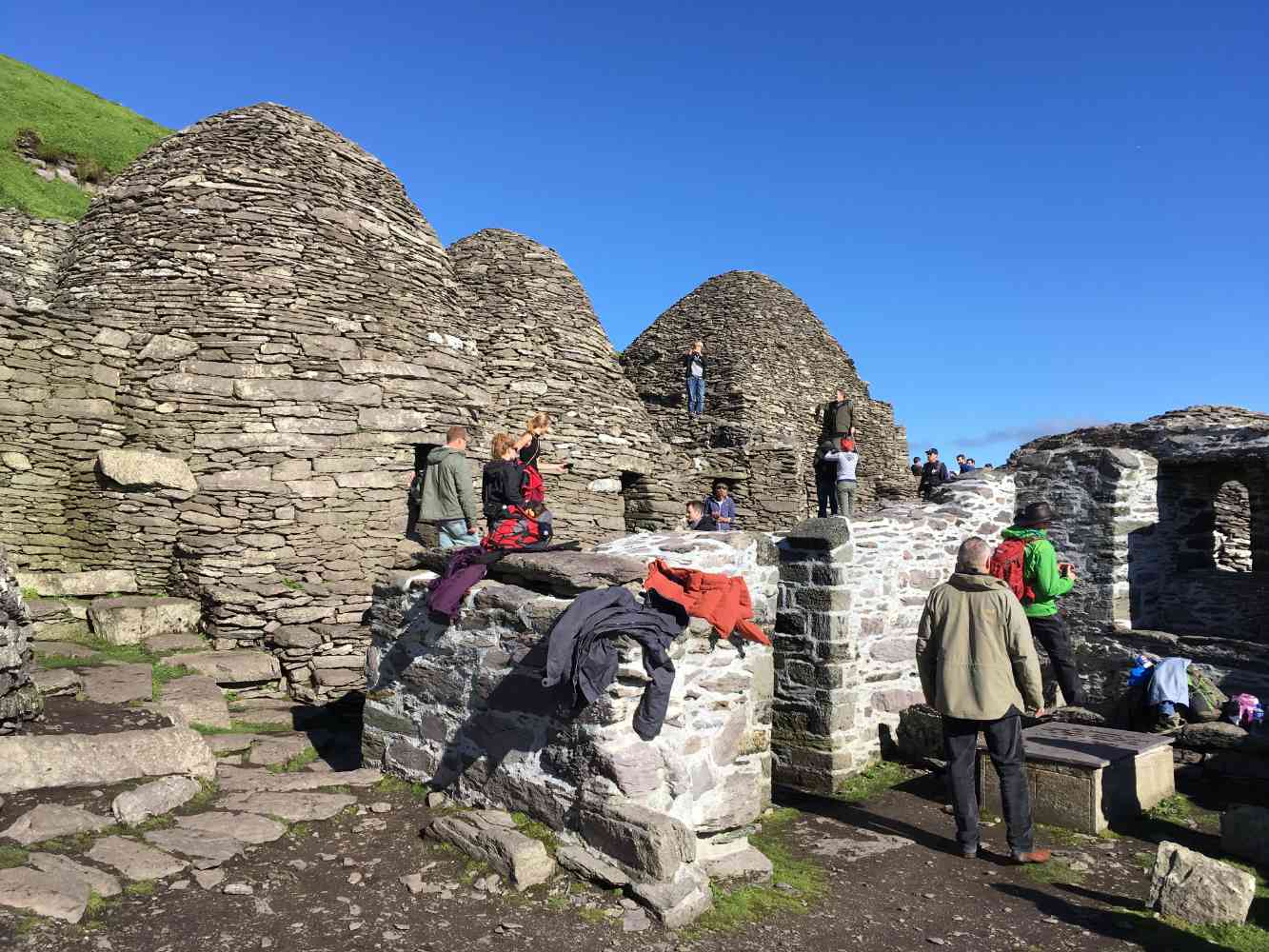
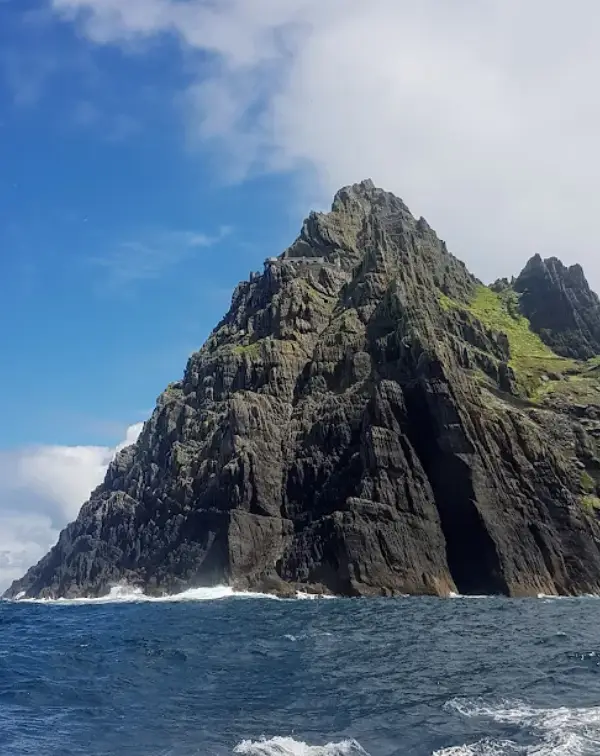
Getting up to the monastery took a lot of work too. The monks made three landing places at the bottom of the cliffs, each with its own stone stairway up to the top. From the boat you can see these stairways going up the rock.
Daily life
A monk’s day on Skellig Michael was a mix of prayer and hard work. The day started with prayer in the church, and a lot of time went on prayer and study.
They also had to look after themselves. They grew what they could in small terraced gardens on whatever soil they could find. They fished in the waters around the island, which are still full of life today, and they caught seabirds and collected their eggs in spring and summer. They collected rainwater, repaired the stonework and kept their boats in order.
All of this meant knowing the island and the sea very well. They had to know when it was safe to bring a boat in and when it wasn’t. In winter there could be weeks when nobody could land at all, and they were completely cut off.
The dangers
Life on the island was dangerous as well as hard. Storms could last for days, winters meant long spells with no contact with the mainland, and there was always the risk of a fall on the narrow steps.
Then there were the Vikings. They raided the monastery more than once in the 9th century. In one raid in the early 820s, the abbot was carried off and died of hunger and thirst.
Even so, the monks stayed. They rebuilt and carried on for centuries.
Leaving the island
By the 12th or 13th century the monks had left Skellig Michael and moved to the mainland. Nobody knows exactly why. It may be that the conditions finally became too much, or that the church had changed and living so far out was no longer seen the same way. You can read more about what happened next in our history of Skellig Michael.
Seeing it from the water
You don’t need to land on Skellig Michael to see what the monks built. From the boat you see the monastery high up on the cliffs, with thousands of seabirds around it and the Atlantic all round. You can see the landing places and the stairways, and you get a real sense of how cut off they were.
Our boat trips have no age limits and no climb, so anyone can come. You might even see dolphins on the way, and the monks would have spent plenty of time looking at the island from a boat too.
If you’d like to see where the monks lived, you can book your Skellig Michael boat tour here.